What is Bycatch Reduction? Bycatch Reduction and Sustainable Fishing Guide

What is Bycatch Reduction?
A Quiet Morning in the Black Sea...
The boat leaves the port before sunrise.
The goal is to catch one of the most productive horse mackerel herds of the season.
The nets are left in the water.
Hours later, while the nets are collected, many unwanted creatures are seen in the net as well as the target fish.
Some of them are fish that have no economic value...
Some of them are young individuals...
Some are protected marine mammals or sea turtles.
In the fishing literature, this situation is called Bycatch.
Sidehunting is not just an environmental issue; it's also a significant issue that can result in economic losses, operational delays, and equipment damage.
What is Bycatch?
Bycatch refers to all creatures that are unintentionally captured, except for the targeted species.
These include:
- Dolphins
- Whales
- Seals
- Sea turtles
- Sharks
- Stingrays
- Protected fish species
- Species with no commercial value
can take place.
Not every bycatch event has the same result; however, when repeated frequently, it can have negative effects on both the ecosystem and the fishery economy.
Why is Bycatch Reduction Important?
Modern fishing is no longer based solely on "catching more fish."
A successful fishing operation at international standards;
- protecting natural life,
- reducing bycatch,
- improving equipment efficiency,
- supporting economic sustainability
applications.
For this reason, Bycatch Reduction has an important place in the fisheries policies of many countries today.
Major Causes of Bycatch
1. Net Selection
Incorrect eye opening or improper mesh type can also lead to the capture of non-target species.
2. Hunting Zone
The risk of bycatch may increase in fishing on migration routes.
3. Seasonal Movements
Breeding periods and migration seasons can affect the density of marine mammals.
4. Nets That Stay in the Sea for a Long Time
The longer the net stays in the water, the higher the probability of encountering non-target creatures.
Strategies for Marine Mammal Mitigation
In the international literature, Marine Mammal Mitigation is the general name of practices aimed at reducing the negative interaction between marine mammals and fishing activities.
These include:
- operation planning,
- selection of the hunting area,
- improving the net design,
- training programs,
- Acoustic Warning Systems
takes place. These methods can give more effective results when applied together rather than alone.
The Role of Acoustic Pinger Systems
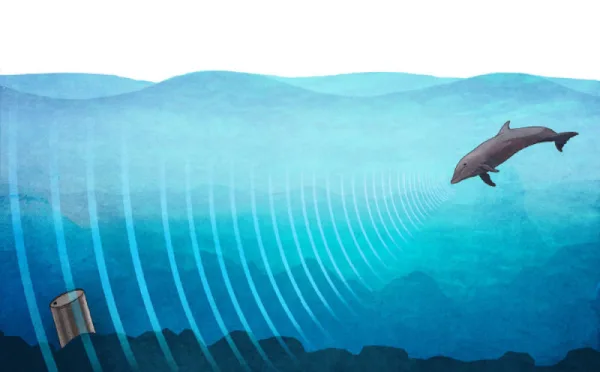
One of the technologies used to reduce bycatch is Acoustic Pinger systems.
These devices are mounted on fishing nets and generate controlled acoustic signals.
Purpose;
- to help the location of the net to be more easily perceived by marine mammals,
- to contribute to reducing the risk of direct contact,
- to support reducing net damage and operational losses.
Acoustic pingers are not devices that solve all problems on their own; however, they can be one of the important components of a properly planned fishing strategy.
Dolpinger's Approach
Dolpinger aims not only to develop a product, but also to contribute to sustainable fishing.
The basic principles of this approach are as follows:
- Contributing to making nets more visible
- Helping fishermen reduce equipment losses
- Helping to reduce unnecessary interaction with marine mammals
- To continuously improve its products by following scientific developments
Therefore, Dolpinger solutions are not just equipment; they should be considered as part of a more conscious fishing approach.
A Real Operation Scenario
Let's imagine a fishing fleet using gillnets in the Mediterranean.
In past seasons, the same area has experienced frequent net damage and loss of prey.
In the new season;
- hunting areas have been replanned,
- Maintenance periods of the nets have been intensified,
- Acoustic pinger systems were used at appropriate points,
- Net collection times are optimized.
As a result, equipment management has improved, and operational efficiency has increased.
This example illustrates the importance of a holistic approach rather than a single solution.
Common Mistakes
❌ Leaving nets at sea for a long time without checking
❌ Continuing the hunt with damaged nets
❌ Placing Pinger devices unevenly
❌ Neglecting battery control
❌ Ignoring seasonal migration movements
Conclusion
Bycatch Reduction is not only important for protecting the environment but also for the long-term success of fishing operations.
Correct net selection, operation planning, regular maintenance and evaluation of acoustic pinger technologies together; can provide more sustainable results both economically and environmentally.
Dolpinger aims to contribute to fishermen by developing technological solutions that support this approach.
Frequently Asked Questions
What does Bycatch Reduction mean?
It is the general name of methods to reduce the unintentional capture of non-target creatures.
Can bycatch be completely prevented?
However, it can be reduced with appropriate equipment, correct operation planning and technological solutions.
Are acoustic pingers part of the Bycatch Reduction strategy?
Yes. In some fishing operations, they are among the assistive technologies to reduce interaction with marine mammals.