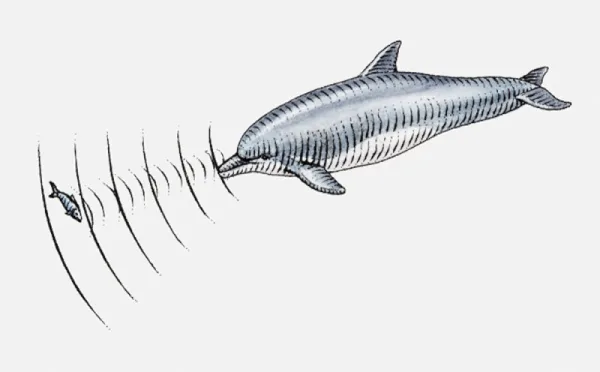
Acoustic Pinger Frequencies: Frequency, Pulse Duration, and Underwater Sound Propagation
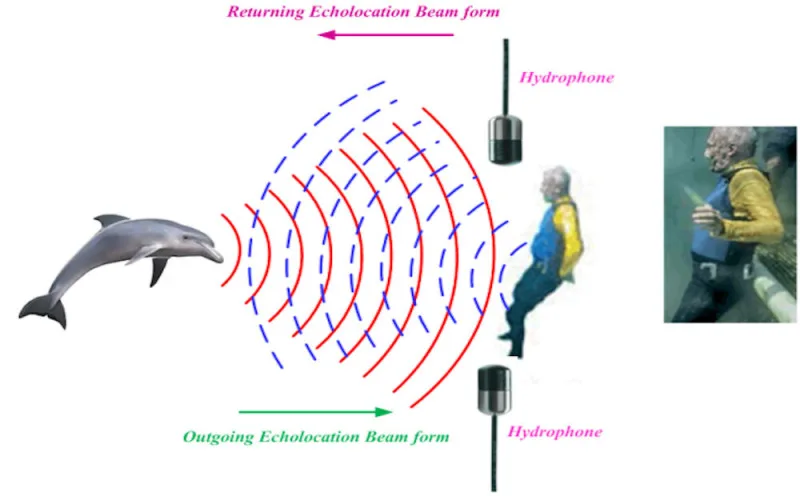
Why is Acoustic Pinger Frequency Important?
Not All Sounds Have the Same Effect
Most of the electronic devices used at sea produce sound.
However, not every sound wave is used for the same purpose.
The tasks of a sonar system and a hydrophone are different.
Similarly, the signal produced by an acoustic pinger device is designed according to its intended use.
Therefore, frequency selection is one of the most critical engineering issues of underwater acoustic systems.
What is Frequency?
Frequency refers to the number of times a sound wave vibrates in one second and is measured in Hertz (Hz).
For example:
- 1,000 Hz = 1,000 vibrations per second
- 10,000 Hz = 10,000 vibrations per second
- 70,000 Hz = 70,000 vibrations per second
As the frequency increases, the physical properties of sound change, and its behavior in the marine environment may differ.
Factors Affecting Frequency Underwater
The acoustic signal is shaped not only by the device but also by the marine environment.
The main factors are:
Water temperature
Temperature variations can affect the speed of sound and the character of propagation.
Salinity
Differences in salt content can alter sound transmission.
Depth
As the pressure increases, the properties of the acoustic medium also change.
Seabed
Rocky, sandy, or muddy grounds can affect the reflection of sound waves differently.
Ambient noise
Boat engines, wave movements, and other sound sources can make acoustic signals difficult to detect.
Why Not Use a Single Frequency?
Not all sea zones are the same.
The hearing characteristics of each dolphin species are not the same.
For this reason, in professional acoustic systems;
- operating frequency,
- signal duration,
- impact range,
- volume,
- Signal pattern
are evaluated together.
Focusing only on frequency does not give accurate results.
Pulse Duration
Acoustic pinger devices do not produce continuous sound.
They create short-term acoustic pulses at certain intervals.
Among the advantages of this approach are:
- reducing energy consumption,
- extending battery life,
- Maintaining system efficiency
can take place.
Pulse duration and repeat interval may vary depending on the product design.
Criteria Considered in Acoustic Design
When developing an acoustic pinger, not only the electronic circuit is designed.
At the same time, the following criteria are evaluated:
- Audio output power
- Frequency stability
- Compressive strength
- Waterproofing
- Battery efficiency
- Operating Temperature
- Mechanical durability
- Salt water resistance
These elements are important for the long-term performance of the product.
The Dolpinger Approach
When developing Dolpinger products, the aim is not only to produce sound.
Goal;
- Adaptive sound algorithms,
- reliable acoustic performance,
- low energy consumption,
- long battery life,
- resistance to harsh marine conditions,
- Easy to use
It is to provide such criteria together.
Therefore, the product development process relies on a combination of electronic engineering and field experience.
A Real Operation Scenario
Two different fishing boats use similar nets but achieve different results.
In the examination, the problem is not only the equipment; it is the assembly layout, maintenance deficiencies and operation planning.
Proper placement of acoustic systems and equipment management after regular maintenance become more planned.
This example shows that successful results are not only based on device selection but also on the right implementation.
Common Mistakes
❌ "Higher frequency is always better."
Frequency selection should be determined according to the intended use and target scenario.
❌ "The specification list alone indicates performance."
Real performance; It should be evaluated together with design, assembly, maintenance and operation conditions.
❌ "Every pinger is suitable for every net."
The type of mesh, the method of operation, and environmental conditions should be considered.
Dolpinger Expert Commentary
Acoustic performance is not only evaluated by laboratory data.
True success is measured by the product's reliability in harsh marine conditions and its long-term field performance.
Laboratory tests and field experiences are evaluated together in Dolpinger's development process.
Conclusion
Frequency selection in acoustic pinger systems is not a feature that can be evaluated alone.
Sound propagation, environmental conditions, signal structure, and product engineering are combined to provide more accurate results.
By adopting this holistic approach, Dolpinger aims to develop reliable acoustic solutions for professional fishing operations.
Frequently Asked Questions
Why is acoustic pinger frequency important?
Because the propagation and perception of sound are evaluated together with the frequency, as well as the environmental conditions and device design.
Does the same frequency give the same result in every region?
Sea conditions, species and methods of operation may vary. That's why Dolpinger uses Adaptive Sound Algorithms.
Is only frequency important in Dolpinger products?
In addition to frequency, pulse duration, energy management, durability, installation, and maintenance are also important parts of system performance.